Sunday, July 17, 2016

Nesting Colony Surviving the Heat

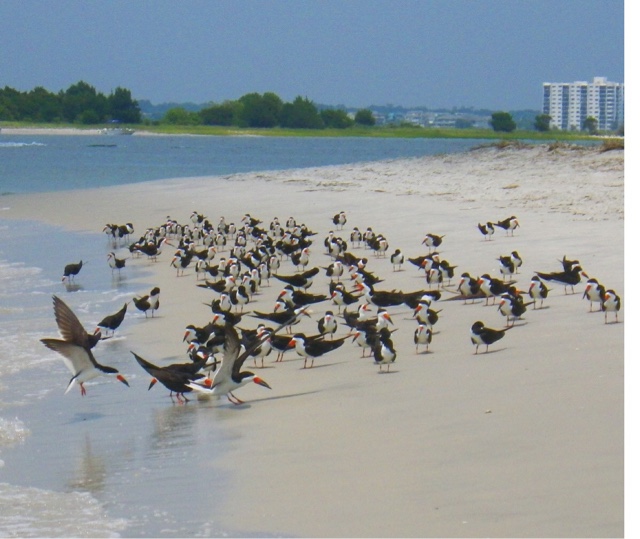
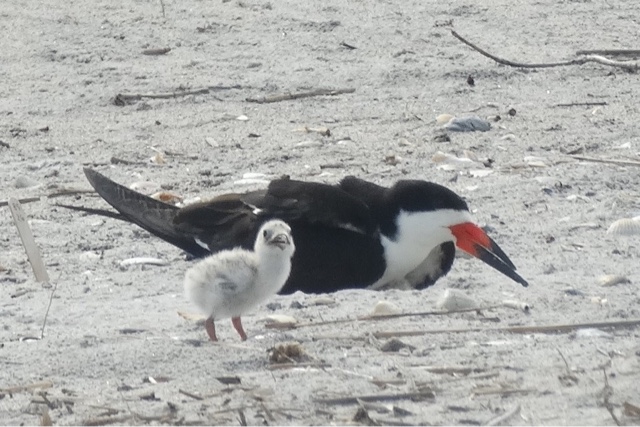
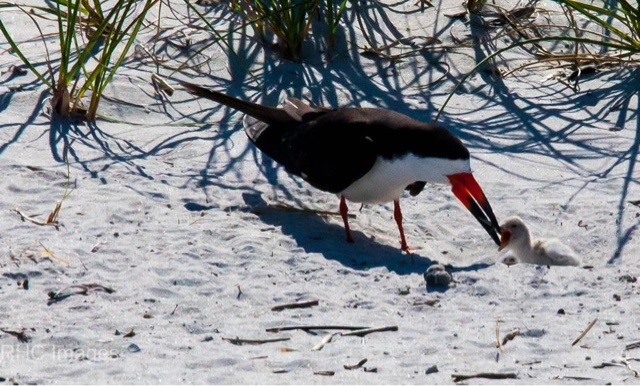
With the heat index often hovering over 100 degrees, the birds and chicks have been seeking shade in the plants and condos.  Many Black Skimmer adults are by the water’s edge trying to cool off and switching places with their mate on the sand.

(photo by Don Ellson)

LEAST TERNS…. Many of the Least Terns have left the area already because they did get an earlier start nesting than last year.  You may recall that we had a tropical storm last year that resulted in our Least Tern colony re-nesting and in the Least Terns leaving more toward the end of July.  We still have a few cute Least Tern chicks to show beachgoers and to photograph and additional birds incubating eggs.  Look for the chicks by the “beach condos” and you will see a parent bird close by! 

(photo by Mary Ann Walton)

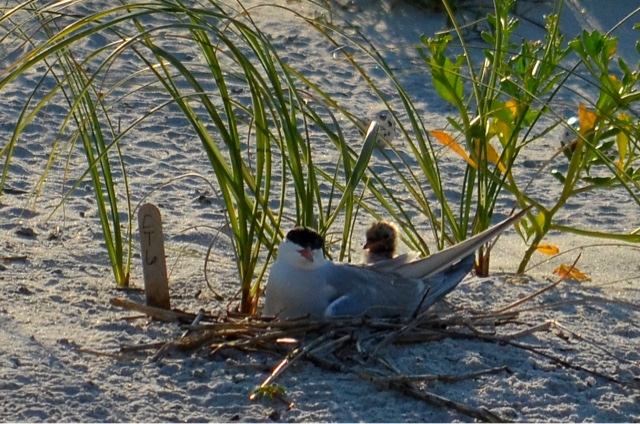
COMMON TERNS…We are seeing fledglings at the water and hiding in plants.  Several pairs appear to be incubating eggs.

(photo by Rex Carpenter)

(photo by John Sutton)

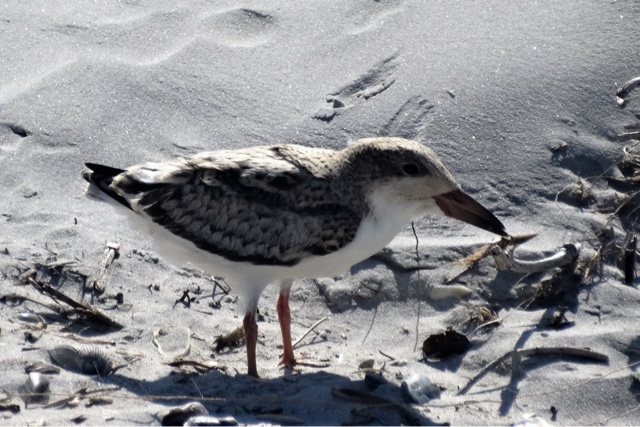
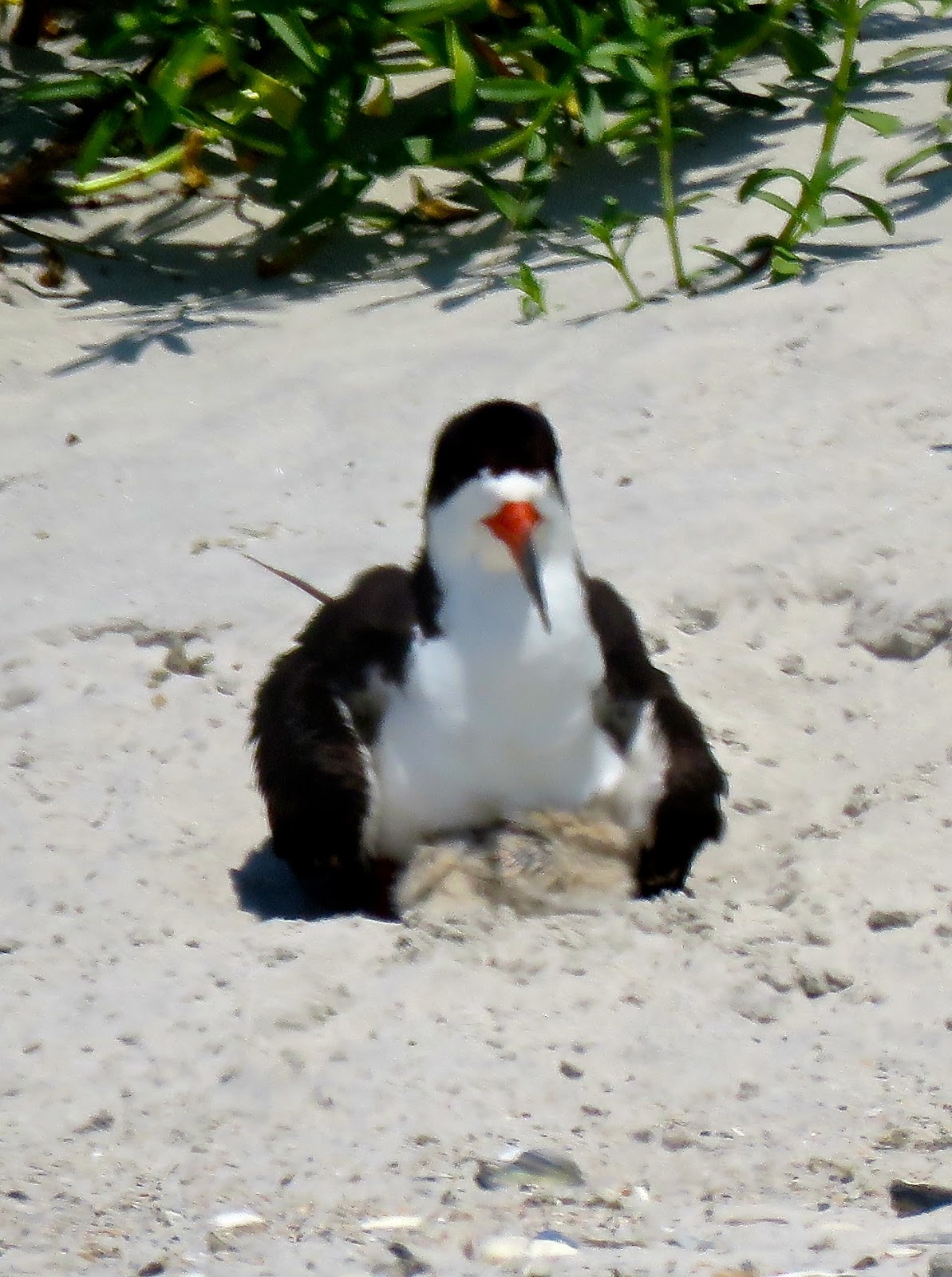
BLACK SKIMMERS … We are seeing a few fledglings at the water with the big boys.  I keep waiting for the big skimmer chick parade to the water which should be happening soon.  I will let you know when “Skimmer School” starts!

(photo by Mary Ann Walton)

(photo by Mary Ann Walton)

(photo by Mary Ann Walton)

(photo by Mary Ann Walton)

(photo by Don Ellson)

(photo by Don Ellson)

(photo by Don Ellson)

(photo by Don Ellson)

(photo by Alex Sabbeth)

AMERICAN OYSTERCATCHERS … We have several oystercatchers hanging out at the colony but did not have any chicks this year.  Masonboro Island is having a record year with Oystercatcher fledglings and a great article appeared in the Lumina News.  Here is the link.

http://luminanews.com/2016/07/masonboros-oystercatcher-population-is-thriving/


VISITORS… Four Black Terns were spotted on July 4th roosting in the colony.  Remarkably the Black Terns visited on 4th of July weekend last year too!

A Roseate Tern also visited the colony.  We had not seen one before at SWB!

Great Black Backed Gulls are still hanging out causing mayhem for our sweet chicks but it seems to be slowing down.

(photo by Mary Ann Walton)

LOGGERHEAD SEA TURTLE NESTING… We currently have 14 loggerhead nests on Wrightsville Beach which is the highest number of nests on Wrightsville since the 90s.  The record is 16 and turtles continue to nest until the end of August….we may break the record this year! 

There are five sea turtle nests on Lea-Hutaff Island which is the island that AudubonNC monitors for both birds and sea turtles.  Lea-Hutaff is the island between Figure 8 Island and Topsail Island.

BIRD WALKS … We will continue our Monday bird walks through August 15… and potentially through the end of August based on the birds in the area and travel commitments of our leaders!  Tell your family & friends.  Mondays at 9 AM at beach access 43!   Just meet us in the gazebo!

Monday, June 27, 2016

Lumina News Shares Success of Nesting Colony

Staff photo by Emmy Errante. 
A least tern adult feeds its chick a minnow from the ocean June 16 at Wrightsville Beach's south end bird sanctuary.

This summer, the colony has 349 least tern pairs, 123 black skimmer pairs, 14 common tern pairs and four oystercatcher pairs. Those numbers are fairly typical, Addison said. The highest number of pairs observed was 597 in 2012, while only a few were counted in 2014 when beach renourishment dredging affected their habitat.

The four nesting bird species form a colony with what Addison called “a little bit of competition and a little bit of benefit.”

The least tern chicks hatched about one month ago, and now they are learning how to fly. They are the same size as the adults, Addison said, but don’t yet have the distinct black markings.

Most of the least tern chicks are about the same age, but a few might be younger if the parents’ eggs failed to hatch and they had to lay more. Nesting together makes it easier for the adults to defend the chicks and eggs, Addison said.

“It helps them to drive away predators,” she said, “because all the terns can get up and chase away a crow that might want to eat their eggs or chicks.”

The terns might defend their nests as a pack, but they only brood and feed their own young, Addison said. Both parents catch small fish from the ocean to feed their chicks.

Several weeks after the terns nested, the black skimmers nested, and their chicks hatched about one week ago, Addison said June 16. They nest after the terns so they can take advantage of the terns’ protection against predators.

“The terns are really aggressive defending the colony,” she said. “The skimmers aren’t as good at that.”

In Wrightsville Beach’s colony, the skimmers tend to congregate closer to the dunes than the terns do. Competition occasionally arises between the species if a skimmer nests too close to a tern.

“A skimmer can displace a tern because the skimmers are bigger,” Addison said.

Common tern chicks have also recently hatched, she added. Adult common terns are slightly larger than least terns with a solid black cap of feathers and a bright red bill.

The oystercatcher is the only species in the sanctuary that has not yet raised any chicks. The four pairs’ eggs hatched, Addison said, but the chicks did not survive.

“I don’t know why,” she said. “Usually we do have at least a few fledglings succeed.”

She’s worried human behavior might affect the oystercatchers. Unlike the other species that are colonial, meaning they nest in a group, oystercatchers are solitary nesters.

Because their nests aren’t located with the rest of the colony at the southern tip of the sanctuary, they are less obvious to beachgoers, Addison said. Postings and signs mark the entire sanctuary, but Addison said people occasionally enter the sanctuary if they don’t see any birds around.

“They’ll ignore the signs and walk under the string,” she said. “They’re disturbing oystercatchers, and that can cause them to lose the chicks.”

Beachgoers can also disturb the birds from outside the postings, Addison added. She has seen people try to feed the birds by tossing small dead fish into the sanctuary. But nesting birds only eat live fish they catch from the ocean, Addison said, so the actions of the well-meaning beachgoers only served to attract predators like gulls to the area.

Onlookers should also be aware if their presence is causing the birds to become agitated enough to fly away, she added. Even if people are outside the sanctuary, if they notice the birds taking to the air in numbers they should back away.

“If the birds fly off their eggs or chicks, a gull or a crow can come in and grab them,” she said.

Volunteers have placed tiny structures in the sanctuary in which the chicks can seek shelter from crows and gulls. Chicks will also shelter in the sparse vegetation, which protects them from both predators and heat.

If a chick or an egg is exposed to the direct summer sunlight for as short a time as 15 minutes, Addison said, it could overheat and die.

“It’s harsh out there on the beach,” she said. “Anyone who has tried to walk barefoot on the sand can tell you that.”

Addison encouraged people who have further questions about Wrightsville’s nesting birds to participate in weekly tours of the sanctuary led by Audubon North Carolina’s Wrightsville Beach bird stewards every Monday at 9 a.m.

email emmy@luminanews.com

Sunday, June 26, 2016

Least Tern Chicks Have Taken to the Air

photo by Laura Scullin
Many of the Least Tern chicks can been seen by the shoreline and are busy trying out their new feathers as they learn to fly and catch their own fish dinners.

photo by Laura Scullin
With the heat index reaching into the 100s this week, it has been a challenge for the chicks to find shade.  They are very creative and can be seen in the vegetation, by the postings and decoys, and hiding under parents.

photo by Kathy Hannah
photo by Kathy Hannah 
photo by Kathy Hannah
One Least Tern chick was apparently not only looking for some shade but decided I needed company on the beach. This chick kept coming out of the posting and stood between my legs and under by chair by my back pack.  We shared some "special moments" before the chick finally tried out its new feathers and fluttered down to the shoreline

photo by Kathy Hannah

The Common Tern chicks are getting bigger than their parents and will be the next of our crew to take flight.
photo by Laura Scullin
photo by Marlene Eader

Meanwhile the Black Skimmer chicks are busy chasing their parents for fish and the parents are hard at work keeping them fed.

photo by Jackie and Eric White
photo by Krystyna Ochola
photo by Jackie and Eric White

There is still a lot to see in the nesting colony. Sometimes the Black Skimmers and Common Terns engage in a bit of "turf warfare".
photo by Jackie and Eric White

And other times the Common Terns decide that the decoys make good neighbors.
photo by Krystyna Ochola

All of the chicks and their parents will find their homes a popular destination this weekend as the Fourth of July crowds head for the beach. This will be a good time for all of us to remember to "share the beach".

Thursday, June 16, 2016

With Thanks to Our Amazing Photographers

A wedding in NJ and now a visit with my dad in OH have taken me away from the beach for two weeks of prime chick time. But four of our Bird Steward photographers have sent me pictures so that I feel like I'm on the beach!   

These incredible photographs each tell a unique story. While scrolling through them try writing a caption that helps create a personal narrative for the adventures of our "bird friends" on the south end of Wrightsville Beach. 

(photo by Michelle Frazier)

(photos by Jackie and Eric White)


(photos by Don Ellson)


(photos by Laura Scullin)